

Creating an effective ad campaign starts with creatives. They shape the user’s first impression and directly impact key metrics — from CTR to conversions.
According to AppsFlyer, playable creatives deliver 26% higher engagement for gaming apps compared to UGC or other formats. At the same time, the main challenge is that, on average, only 1 out of 50 creatives becomes successful, which means scale and variety of ad materials directly affect results.
That’s why advertisers are constantly looking for new approaches to creatives. One of the most interesting tools available in Moloco is double-end cards (DEC). In this article, the RentAcc team explains what this format is, how it works, and what advantages it brings to ad campaigns.
What are double-end cards
Regardless of the ad format, the number of touchpoints with the user plays a crucial role. The more interactions there are, the higher the chance that the user will complete the target action after viewing the ad.
Moloco offers a dedicated solution for this — double-end cards (DEC). After the standard end card, an additional interactive screen appears with a call to action to install the app.
On the company’s official website, this logic is described briefly like that:
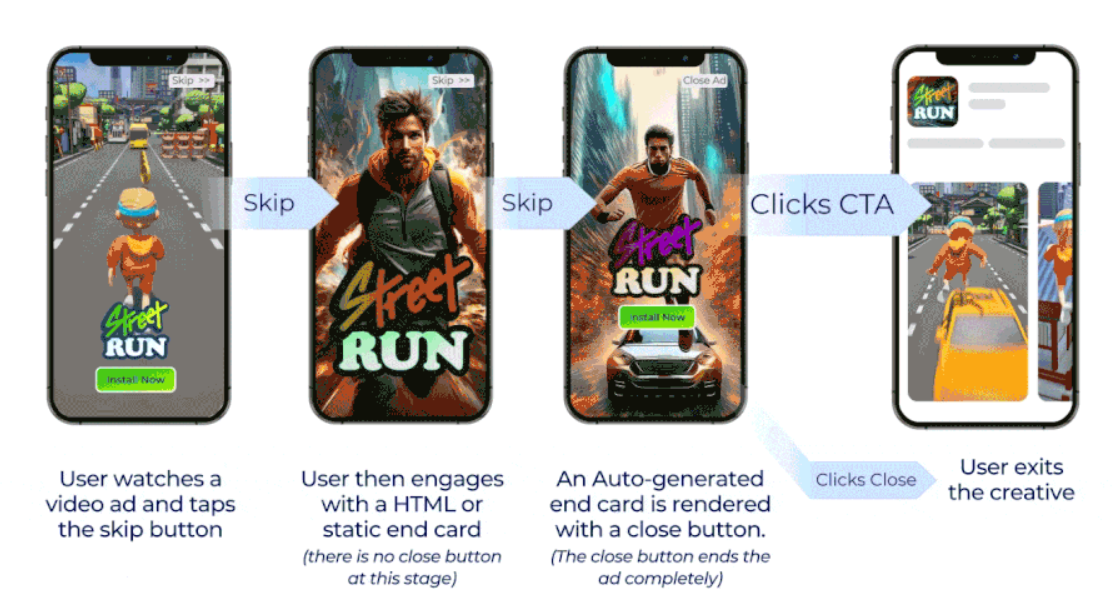
We have tried to expand this description to show how double-end cards work in practice.
- The user watches a video ad and clicks “Skip”
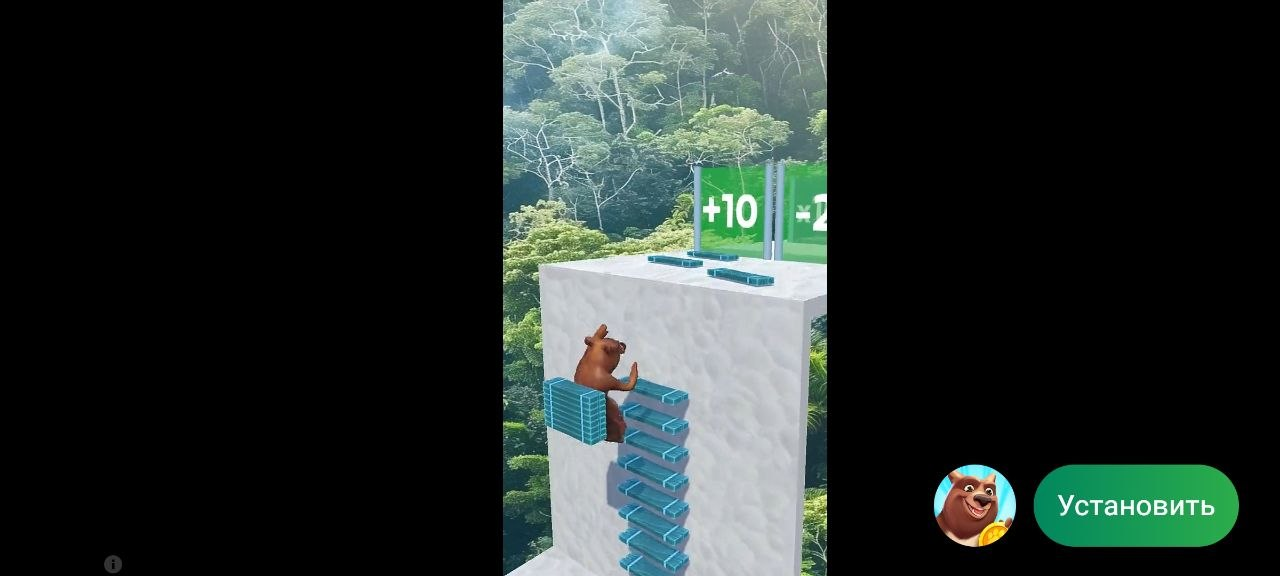
- A playable or standard end card opens (no close button, only a skip option)

- Then Moloco automatically generates a double-end card, adding a second opportunity to convert — for example, install the app or visit a website
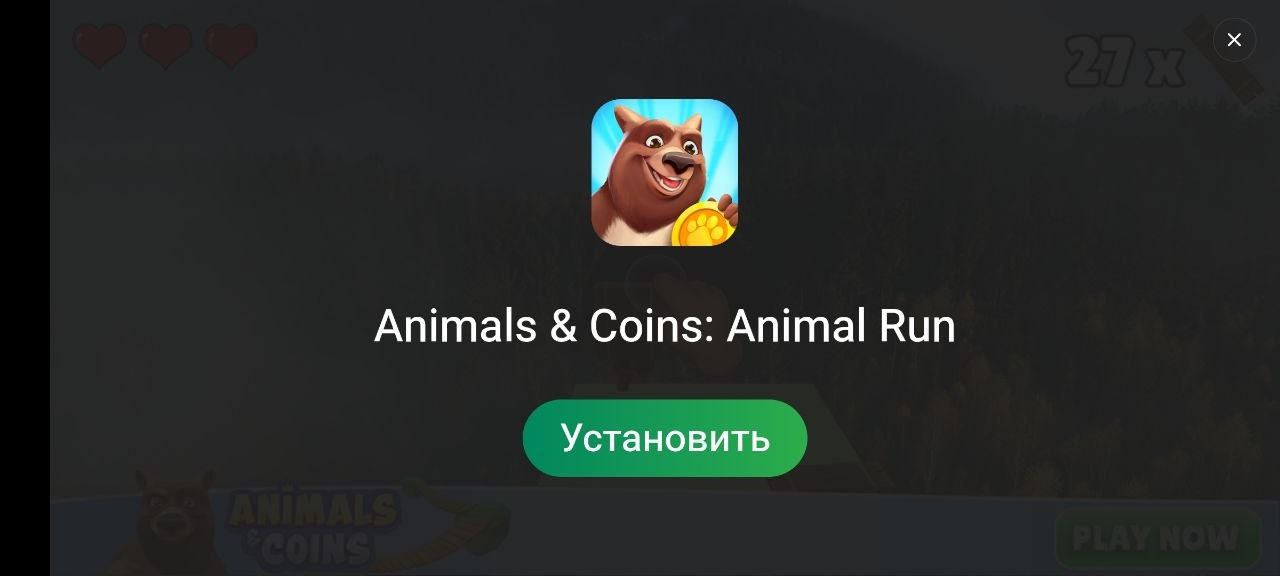
- At this stage, the user either closes the creative or proceeds to download the app from the store.
This format enhances creatives without adding extra workload for the team. Double-end cards don’t need to be created manually — they are automatically assembled using elements like the app icon, title, and CTA button. As a result, advertisers get an additional interaction point with the user without spending extra time or resources on production.
How DEC Differs from Other Formats
Now let’s break down how double-end cards (DEC) differ from other formats:
- Classic End Card
This is the basic format where, after the main video, the user sees a final screen with a call to action. It can be static or animated, created manually, or generated directly in Moloco. - Playable Ads
A format where users can interact with the product inside the ad — for example, play part of a game level or test app mechanics. This approach drives high engagement and typically attracts higher-quality users, but requires significantly more resources to develop and launch. - Double-End Cards (DEC)
This is an extension of video ads that adds an extra step after the standard end card. The user sees two final screens in sequence, increasing the number of touchpoints and providing an additional chance for conversion. The second screen is generated automatically based on existing assets.
According to Moloco’s internal tests, DEC improves CTR and overall campaign performance. For example, in VI-campaigns, installs per mille (IPM) increase by 7% to 14%. The best results come from creatives where the second screen logically continues the story without repeating the same content.
How to Start Using DEC
One of the key advantages of double-end cards in Moloco is that the format doesn’t require a separate launch or complex setup. Moloco’s machine learning algorithms analyze each impression and automatically decide when to use DEC to maximize performance. Essentially, the platform tests the format for you and enables it where it can drive better results.
From the advertiser’s side, the task is simple: prepare a solid base of creatives the algorithm can work with — primarily: video ads, end cards, playable formats. If these elements are in place, the system can automatically generate an additional screen and integrate it into the ad flow to enhance user experience.
Three Key Advantages of DEC
According to Moloco, 70–80% of video ads are now served with interactive end cards instead of static ones. These formats deliver significantly higher conversion rates — up to 30%. Having the necessary creative assets allows DEC to be used automatically, increasing user touchpoints and directly impacting campaign results.
This is what sets Moloco apart from other traffic sources — a wide range of built-in features that enhance performance. Of course, double-end cards alone won’t guarantee massive profit. Results still depend primarily on creative quality. Algorithms optimize delivery — but it’s the creative that captures attention, drives engagement, and ultimately increases installs and revenue.
Additional Insights:
- A second chance for cold audiences
If a user doesn’t click on the first screen, DEC acts as a soft retargeting layer, encouraging them to take action. - Works best with dynamic video
If the main creative already engages users (e.g., gameplay or product demo), the additional card amplifies the effect and increases conversion probability. - Testing still matters
Even with automation, performance heavily depends on creatives. Variations in CTA, visuals, and messaging in the second card can significantly impact CTR and IPM.
With the right approach, double-end cards become a growth lever for ad campaigns without increasing budget.
Launch Moloco campaigns through RentAcc’s agency accounts to fully leverage this format in practice. DEC will help boost CTR and installs, while RentAcc protects your budget with campaign automation and control tools.
 Share this post