

Facebook is a traffic source that has long symbolized the affiliate marketing industry. Media buyers have favored it for its massive audience, low entry barrierand a huge number of free educational guides.
The advantages of Facebook haven’t disappeared, but Meta continues to tighten its policies, gradually pushing affiliates off the platform. The main pain point today is unpredictability. For example, moderation may tighten in Q1, mass bans of FB pages and BM accounts can start in Q2, and Q3 may bring sharp performance drops. Instead of forecasting results, buyers are forced to guess what issue will hit next — and hope for the best.
It’s no surprise that some affiliates have started moving to other platforms where they can plan work several months ahead. One of the most popular alternatives for app-focused media buyers is the Moloco Ads network.
If you’re also thinking about switching sources, don’t rush the decision. The RentAcc team prepared this guide to give an objective comparison between Facebook and Moloco.
Why Facebook remains the main traffic source for gaming
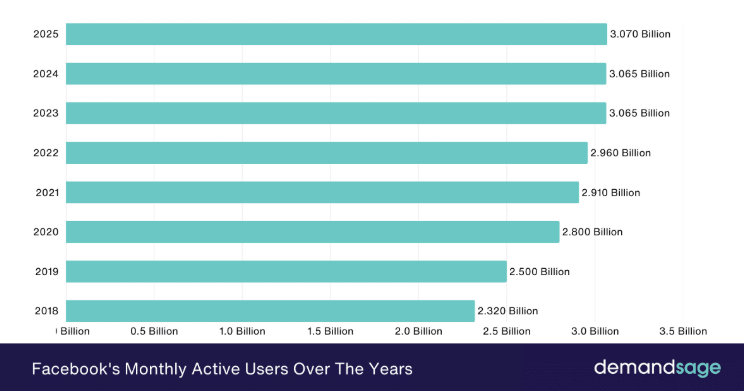
Facebook is one of the largest social platforms in the world. According to DemandSage, in 2025 it had 3.07 billion monthly users. By some estimates, this accounts for nearly two-thirds of all global social media traffic — and experts expect these numbers to grow even further.
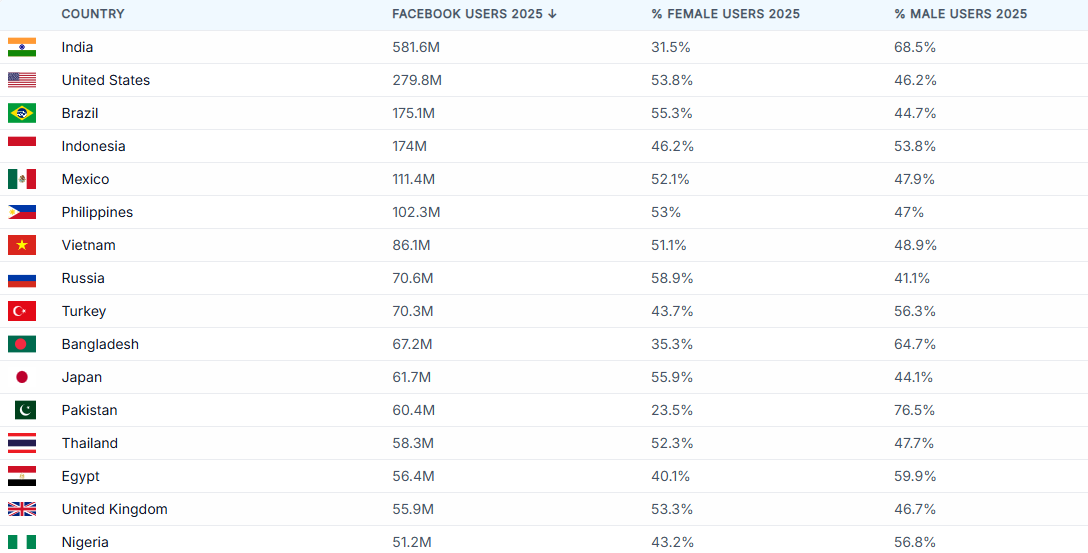
What’s especially important is the GEO distribution. According to World Population Review, the top countries by Facebook users include markets that are highly attractive for affiliates promoting gaming products.
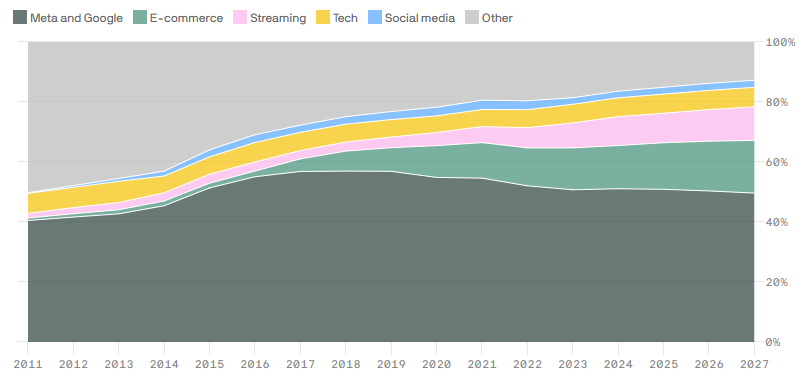
Meta is a massive advertising ecosystem that holds a significant share of the global digital ad market. According to Axios, in 2026 Meta and Google together account for around 50% of the U.S. digital advertising market, with roughly equal shares.
It’s also worth noting that Facebook has repeatedly set trends for the entire online advertising industry. For example, it popularized event-based analytics via pixels and introduced large-scale interest-based targeting.
It wouldn’t be an exaggeration to say that Facebook remains a trusted and unmatched traffic source in terms of scale, flexibility, and the variety of advertising opportunities it offers.
Why media buyers love Facebook
Scale isn’t the only reason buyers keep running traffic on Facebook.
Wide range of ad placements. Running campaigns on Facebook means access to multiple major placements at once:
- Messenger
- Threads
There’s also flexibility in how you launch app campaigns — PWA, WebView, native apps, or apps from official stores.
Low entry barrier. Right now, the affiliate marketing industry lacks skilled media buyers. To cope with the staff shortage, owners are hiring newcomers to their teams and training them on the job.
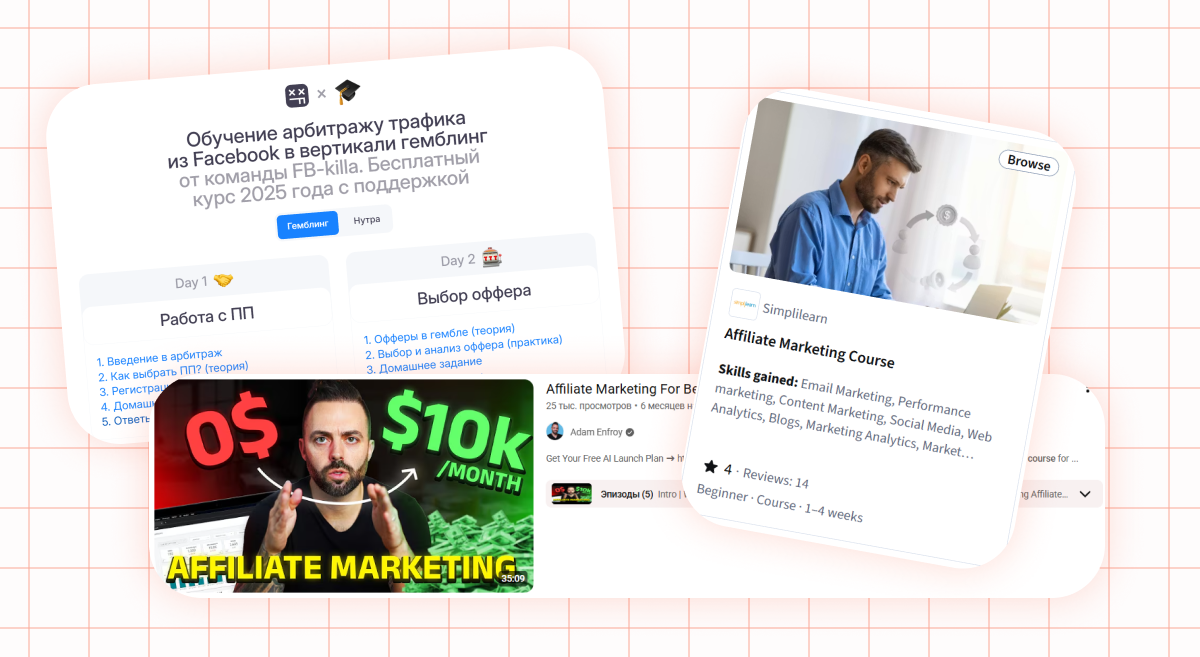
There are terabytes of free educational content about Facebook available online. No one will hand you winning setups, but you can easily learn the ad interface, account farming, and core media buying principles. Affiliate networks and services often run structured training programs with mentors, feedback, and assignments.
You can also start with minimal budgets and see initial results within 1–2 days. To test an offer and find a working setup, $100 can be enough — if you have basic skills.
Flexibility. Facebook is all about variety. It offers a wide range of options:
- creative formats: images, videos, carousels, slideshows
- placements: feed, stories, reels, and more
- targeting: Advantage+, Lookalike, Broad, Custom
Listing all variables would require a separate article — that’s how flexible the platform is.
Why buyers are getting disappointed with Facebook
Facebook is known for innovation and massive traffic, but over time, these advantages have also turned into drawbacks.
Constant policy tightening. Not all updates benefit media buyers. Meta is clearly not happy with the number of affiliates on the platform, which leads to continuous restrictions:
- stricter AI moderation
- frequent “storms”
- account bans
- stronger anti-fraud systems
- and more
As a result, ad account bans have become commonplace for affiliates. Without going into the specifics, the situation looks like this: as soon as buyers adapt to one issue, Facebook introduces another.
Rising competition and increasing costs. The prospect of making money has led to a massive influx of webmasters to the platform, which has fueled increased competition with all the attendant consequences. To understand the current state of competition, let's look at the growth dynamics of Facebook advertising revenue — the money advertisers have brought to the platform.
According to Oberlo, Facebook ad revenue reached $123.73 billion in 2025, and it’s expected to keep growing. Experts predict that this figure will grow even more in the coming years.
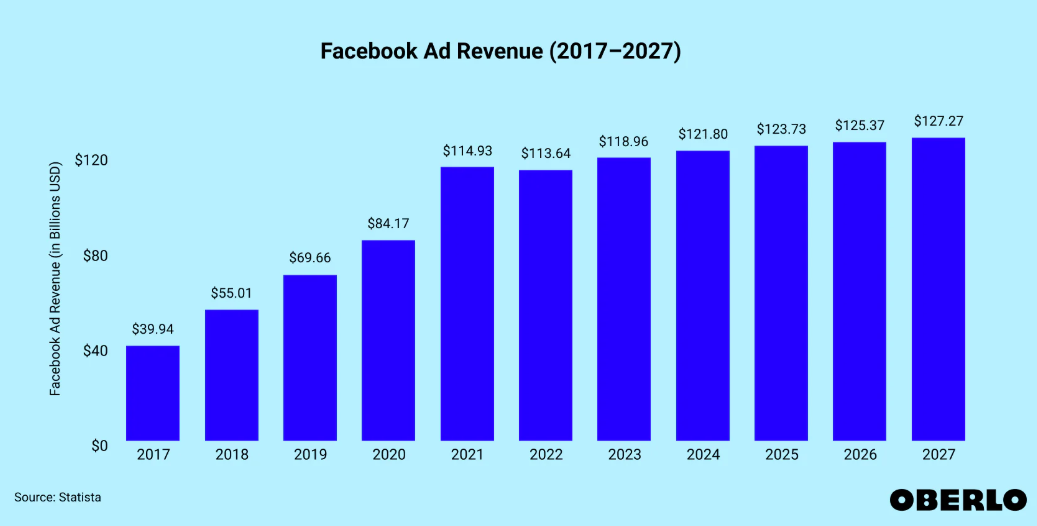
You might argue that audience size is growing too. The problem is that the growth is disproportionate—we're seeing a nearly tenfold difference.
| Growth dynamics in the period from 2024 to 2025 | |
|---|---|
| Ad revenue | Audience size |
| +1,58% | +0,163% |
The more money flows into the ecosystem, the higher the competition. This overheats the auction and drives up key metrics — CPM, CPC, and CPA.
According to RockApp, in Q2 2025: CPM in gaming increased by 33%, but CPC increased by 21% (compared to Q1).
Declining traffic quality. Analysts from eMarketer studied the ratio of ads to user attention time — and Facebook showed one of the worst results.

Simply put, there are many times more ads on the platform than a potential lead can see. This leads to two problems:
- your creatives often don’t get noticed
- users develop strong banner blindness
The root cause of both problems is the abundance of advertising on social media. Coupled with constant restrictions and rising traffic prices, launching an advertising campaign is becoming more difficult, expensive, and tedious. That’s exactly why more and more media buyers are considering switching traffic sources.
What is Moloco Ads and why gaming-focused media buyers should consider it
Affiliate marketing is a specific niche. Aside from nutra and e-commerce, most buyers promote digital products that have mobile apps. For such offers, ad networks focused on in-app traffic work especially well — and one of the key players here is Moloco Ads.
Why media buyers are moving to Moloco
Moloco Ads is not a classic ad network. It doesn’t own ad placements — instead, it aggregates inventory from major platforms like Unity, Vungle, AppLovin, and others. In total, it covers over 3 million apps.
Due to its abundance of placements, Moloco generates more traffic than most social networks. This advertising network reaches 2 billion users daily. That's as many as Instagram and TikTok combined.
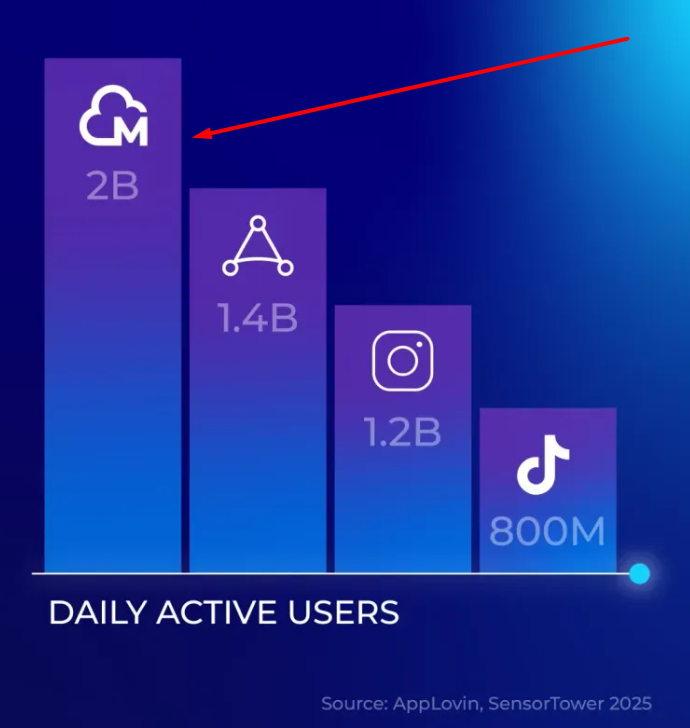
But volume isn’t the only reason buyers are paying attention to Moloco.
Loyal moderation. Moloco isn’t about constant bans and account shutdowns. If your creative passes moderation, it will keep running until you manually stop the campaign.
This is largely because Moloco's rules don't specifically prohibit gambling advertising. While there's no global ban, there are local restrictions — promoting gambling products is prohibited in:
- Africa: Algeria, Sudan
- Asia: Afghanistan, Indonesia, South Korea, China, India
- MENA: Kuwait, Oman, Qatar, Saudi Arabia, UAE, Turkey
To avoid issues, you simply switch to allowed GEOs.
Higher conversion rates. Ads are shown directly inside mobile apps — often games. For example, crash game mechanics can seamlessly blend into casual games like match-3 or Subway Surfers-style environments. This native placement increases relevance — and, as a result, conversion rates.
For example, in March, the average performance of campaigns launched through RentAcc was as follows:
| Spain | Italy | United Kingdom | France | |
|---|---|---|---|---|
| inst2reg | 46.74% | 50.78% | 34.47% | 49.39% |
| reg2dep | 7.17% | 5.86% | 9.20% | 5.48% |
AI-driven optimization. Moloco combines neural networks and machine learning to reduce manual work and improve traffic quality.
Moloco's internal engine operates on the following principles:
- analyzing for creatives, targeting, and first-party data;
- collecting user feedback;
- automatically optimizing advertising campaigns based on the ROAS model: the algorithm searches for users who are most likely to perform a target action.
The longer the algorithm learns, the better the traffic quality becomes.
⚠️ Neural network algorithms target high-quality audiences, but still, performance needs monitoring. With RentAcc, this is automated through AutoRules — you can set conditions to stop ad groups or top up accounts based on metrics.
High-quality traffic. Beyond AI optimization, traffic quality is enhanced by partnerships with premium ad networks. For example, Moloco gives access to AppLovin’s in-app inventory, which is usually unavailable for direct access. These platforms prefer working with established partners in the white-hat ecosystem.
By working with Moloco, media buyers get access to less saturated audiences, relatively lower competition and premium inventory without complex approvals. All of this — without the constant “fight for survival” typical for Facebook.
Why affiliates are not rushing to switch to Moloco Ads
App-only launches. Moloco shares the same limitation as other in-app networks — you can only run campaigns for apps listed in official stores. No PWA or APK options.
Keep in mind that gaming apps get banned regularly — which can lead to situations where budget is spent with no return.
⚠️ With RentAcc, if your app gets banned, the campaign is automatically stopped.
High entry barrier. Moloco’s interface is far from intuitive, and the situation with learning materials is tough — there are almost no guides available, even paid ones. The same goes for local communities. In reality, the only way to learn Moloco is through official documentation and trial-and-error.
To optimize campaigns, you also need to integrate an MMP tracker — which adds another layer of complexity and uncertainty. We’ve covered app setup and MMP integration in a separate guide.
On top of that, analytics in in-app sources works differently compared to Facebook. In Moloco, it’s built around reports — a system of reports for active and archived campaigns. In our article, we explain how reporting works, what metrics you can analyze, and why it’s worth paying attention to.
Account access limitations. Moloco uses an invite-based system. You can’t just sign up, add a card, and start running ads.
To get access, you need to communicate with sales reps and wait for approval. It's practically impossible to do this without outside help, as the platform is geared toward large, white-hat businesses.
⚠️ With RentAcc, this issue is already solved. You get ready-to-use agency accounts, a clear CRM for management, and full support at launch — no need to build infrastructure from scratch.
Higher starting budgets. Difficulties in mastering the source don't end with a lack of training data. Moloco isn't designed for microspending like Facebook.
To get started, you need at least $2,000–$3,000: this amount is only enough to test one GEO. The problem is that Moloco's algorithms take longer to learn than those of most platforms. If you launch an ad campaign on a modest budget, the engine won't have enough data for training, which will impact your overall ROI.
Facebook vs Moloco: quick comparison
To summarize, we have prepared a comparison table.
| Criteria | Moloco Ads | |
|---|---|---|
| Entry barrier | Low | High |
| Starting budget | $50–100 | $2,000–3,000 |
| Stability | Low | Medium |
| Analytics requirements | Basic | Advanced |
| Offer flexibility | Wide | Apps only |
| Moderation | Strict | Loyal |
Facebook is a good fit for buyers with limited budgets who don’t want to deal with apps, MMP integrations, and technical complexity.
Moloco Ads, on the other hand, is better suited for media buyers who are tired of constant bans and low-quality traffic — and are ready to trade simplicity for stability and scalability.
Why Media Buyers Combine Facebook and Moloco
You don’t have to stick to just one traffic source — you can run both Facebook and Moloco. Many affiliates already follow this strategy, and here’s why.
Diversification. A media buyer relying on a single traffic source becomes dependent on that platform. There’s always a risk that the source may stop performing at some point — for various reasons:
- Facebook or Moloco may tighten policies and push affiliates out;
- competition may grow to the point where campaigns become unprofitable;
- algorithms may become too unpredictable.
A buyer who knows how to work with both Facebook and Moloco can simply shift to the platform that still performs. If you’re locked into one source, you have nowhere to go. While some affiliates keep earning, others are forced to urgently learn a new platform.
Reviving setups. If you previously found a profitable creo on Facebook, you don’t necessarily need to build a new one from scratch. There’s a simpler option — test the same setup on Moloco. Keep in mind that these platforms operate differently, so you’ll need to adapt your funnel to fit the new environment to achieve positive results.
Conclusion
Facebook and Moloco Ads are two of the most talked-about traffic sources in the gaming vertical.
Traffic quality on Facebook is gradually declining while costs are rising — something that isn’t as noticeable with Moloco. At the same time, Facebook users don’t face the same difficulties with tracking and are less dependent on large budgets. In a way, this is a clash between the old and the new school — but there’s no clear winner. Instead of choosing one source, you can diversify your budget and potentially double your profits.
The RentAcc team supports any approach and helps with launching and optimizing campaigns on both platforms. Reach out to our managers to learn more — they’ll get back to you quickly and provide an agency account for the platform you need.
 Share this post