


Video creatives that had been feeding the market for the past few years started to noticeably lose efficiency in 2025. Today, due to total banner blindness, simply showing an ad is no longer enough to grab a user’s attention — you need to motivate the user to take action.
Playable Ads (interactive ads also known as playable app ads) are exactly the tool that breaks through user indifference. Instead of a polished picture, they offer an interactive test drive of the app. In this article, we’ll look at the results this format delivered in 2025 and break down the approaches, strategies, and trends for 2026.
Playable Ads are the key trend for 2026
The idea behind the format is simple: it’s a mini-game or interactive module that launches immediately after the ad click. Users don’t need to go to the app store or wait for a download — they can try the gameplay or functionality right here and now.
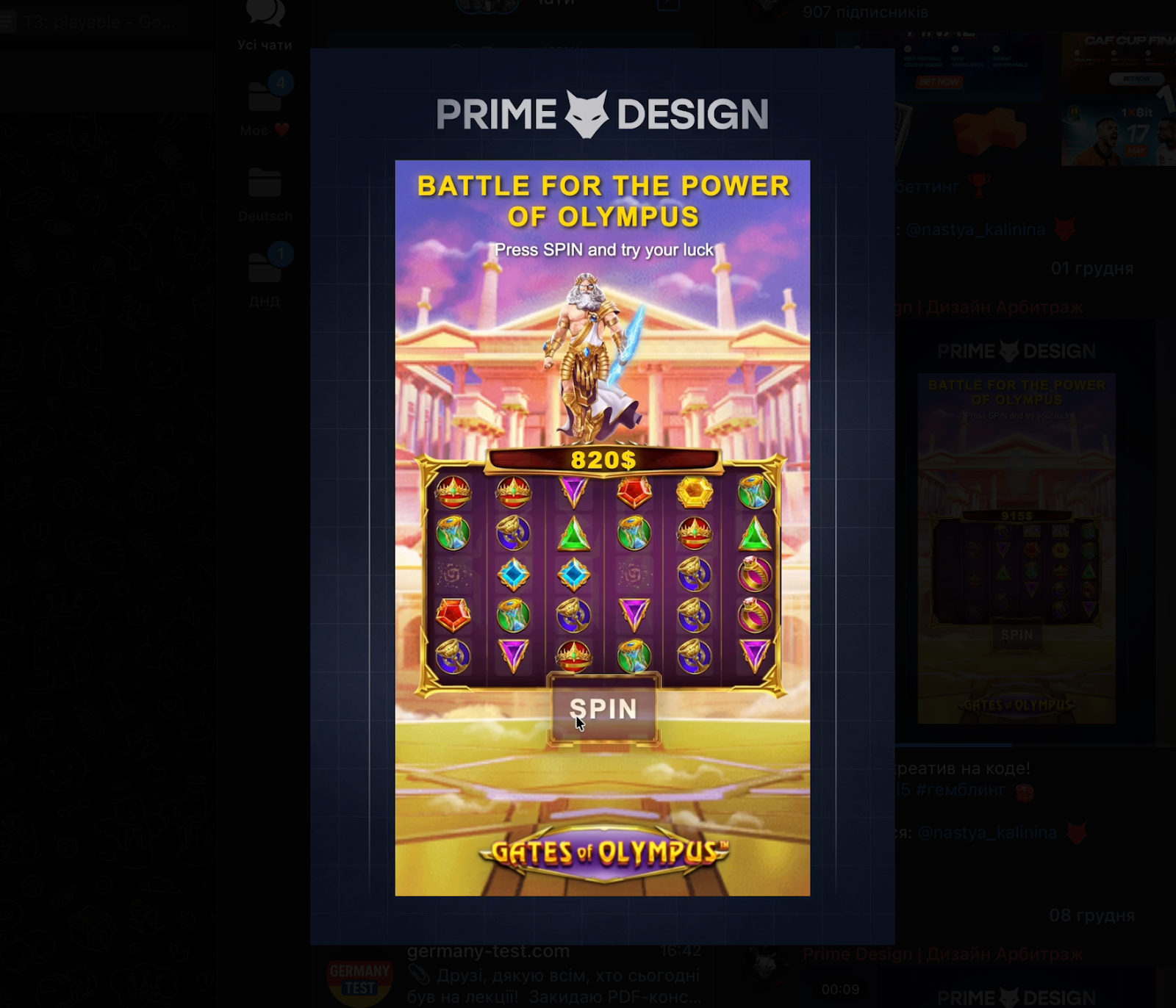 Playable Ads cut through banner blindness (playable creative examples source: Prime Design channel)
The affiliate marketing market is shifting massively toward Playables not out of creative passion, but because of pure auction math. Community data accumulated throughout 2025 shows that interactive formats outperform classic video across key performance metrics. That’s why Playables are set to become the main profit driver in the upcoming season:
- High IPM. This is a core metric when running traffic. Playable Ads generate significantly more installs per 1,000 impressions compared to video. Ad network algorithms see the higher CTR and prioritize your impressions, allowing you to win auctions even with lower bids.
Traffic quality and LTV. Users who complete a mini-game install the app consciously. This traffic shows much higher retention rates. That’s critical, as advertisers see real user activity and are less likely to cut payouts due to low-quality traffic. - “Try before you buy” psychology. The format closes the loop of unfinished action. If a user starts playing and wins (or almost wins), it becomes psychologically harder to abandon the reward or result they’ve already “earned,” creating strong motivation to tap the Install button.
The combination of these factors makes interactive ads not just an alternative, but a necessity for survival in an overheated market. If you plan to scale winning setups in 2026, ignoring this format means voluntarily handing over the cheapest and highest-quality traffic to your competitors.
The Anatomy of a Successful Creative
To achieve high conversion rates, visual appeal alone isn’t enough. The experience of large media buying teams has defined a “gold standard” structure for Playable Ads — breaking it usually leads to wasted budget.
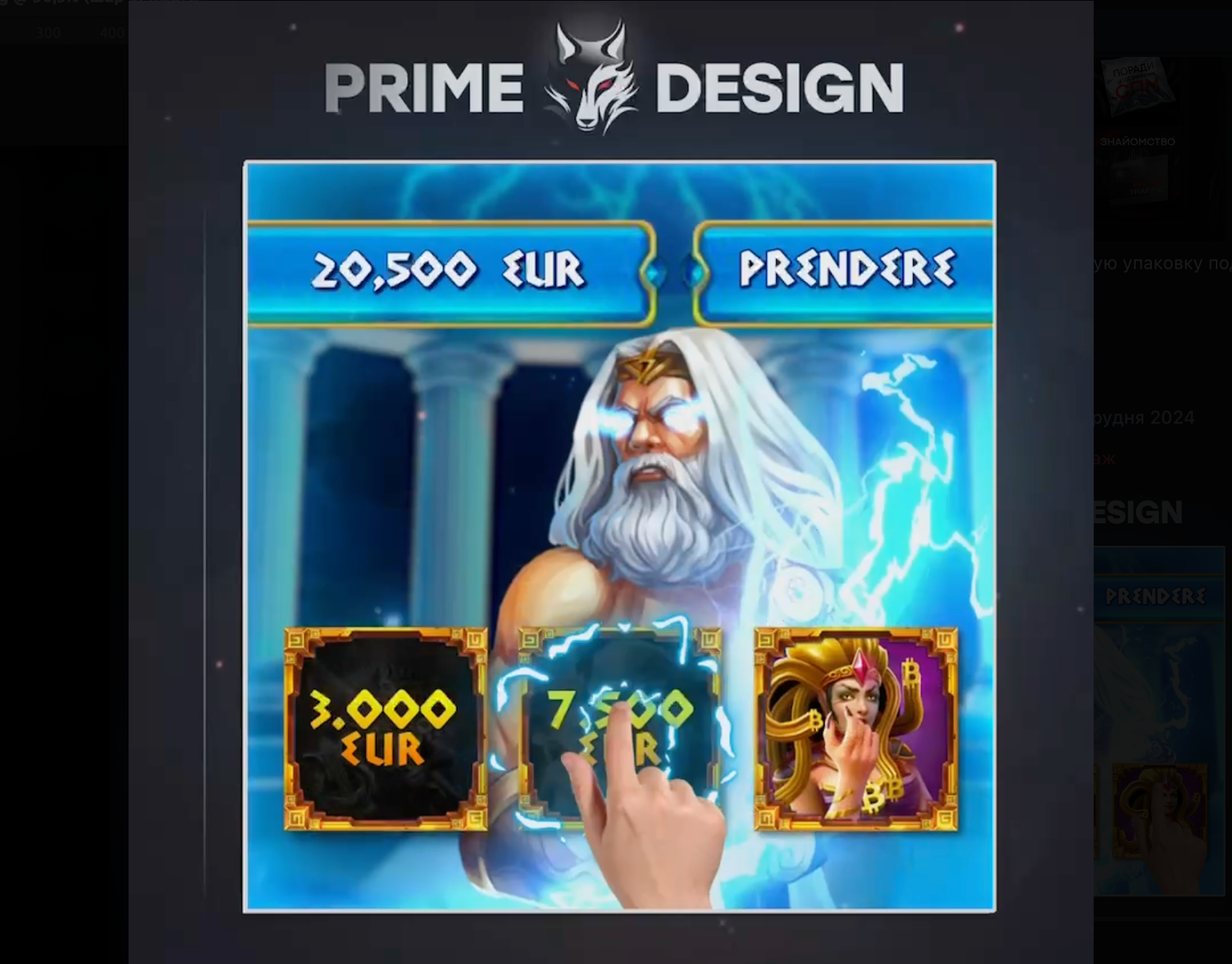 Education is a critical stage of the Playable Ads funnel (source: Prime Design channel)
An ideal interactive creative consists of three sequential blocks:
- Tutorial. You only have 2–3 seconds to explain the rules, so use a visual finger hint that shows the gesture and guides the user’s action.
- Gameplay. The most common mistake is trying to build a full, complex game. In advertising, what works is a simplified one-tap mechanic with a guaranteed win or a “near-win” to trigger excitement.
- End Card. The final screen shown after the interaction, which must include a clear CTA and an Install button.
Following this sequence is critical. Any added complexity at the tutorial or gameplay stage drastically reduces the number of users who reach the end card — and therefore lowers the final install conversion.
Technical nuances of launching
The right visual is only half the battle. From a technical perspective, a Playable Ad is not a video file — it’s an HTML5 application packaged as an archive and launched inside the ad network’s SDK. This is where the main launch challenges of 2026 come into play.
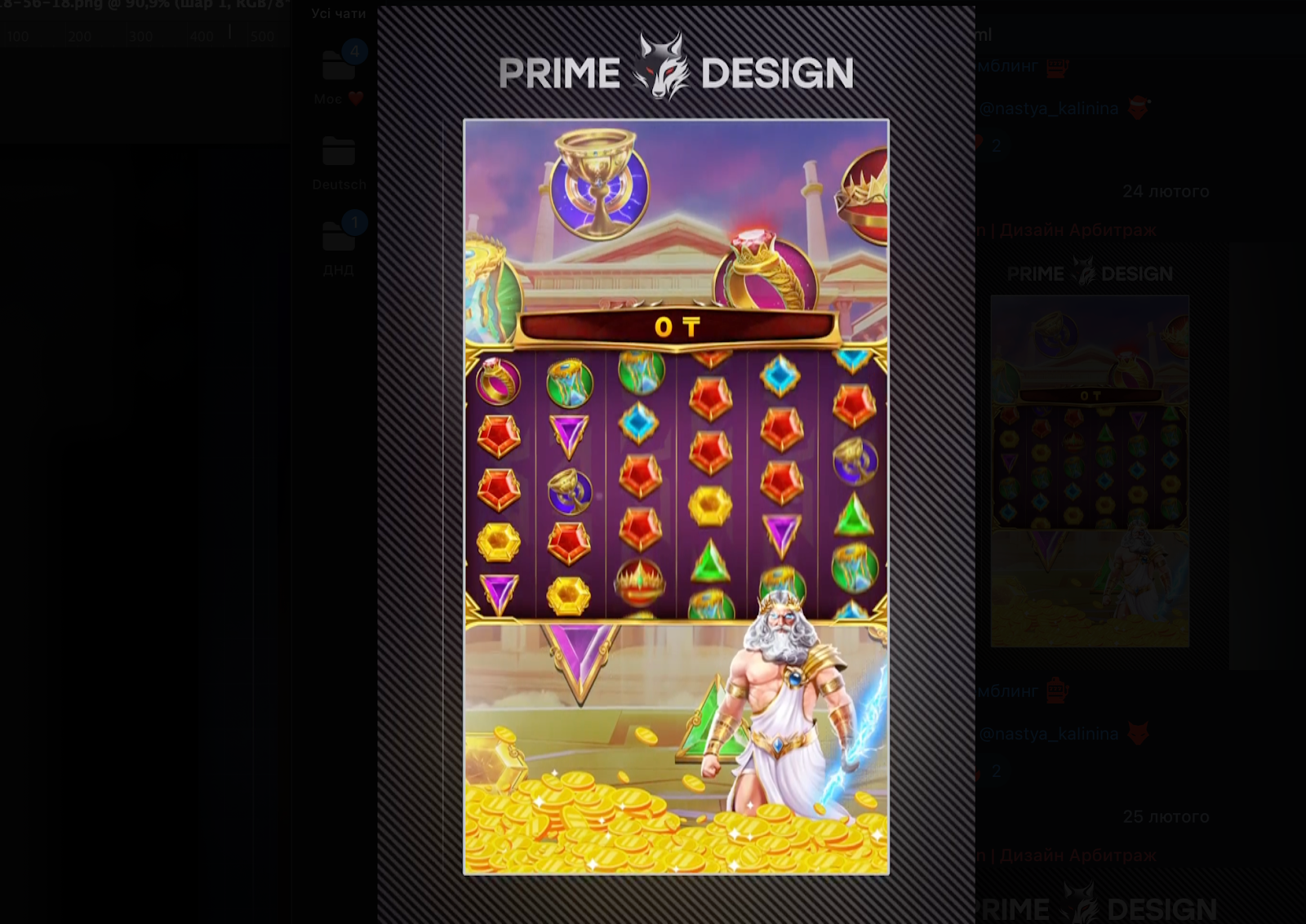 Familiar game mechanics drive user engagement (source: Prime Design channel)
When preparing to run traffic, you’ll need to solve several non-obvious technical tasks:
- File size optimization. The creative should weigh between 2 and 5 MB, depending on the requirements of the specific ad network. If the game doesn’t load within 3 seconds on slow mobile internet (especially relevant for Tier-2 and Tier-3 GEOs), users will simply scroll past it — and you’ll pay for a wasted impression.
- Passing moderation. Poorly warmed or freshly created self-registered accounts often get rejected at the moderation stage. Proper warm-up takes time and patience — resources you don’t always have. With agency accounts, it’s different: thanks to initially high trust, they pass JS code moderation smoothly and allow you to get results from the very first launches. RentAcc provides different types of agency accounts for any Tier and task.
- High-quality production. Coding a Playable from scratch is time-consuming, while template playable ads builder often produce messy code that moderators don’t like. The optimal approach in affiliate marketing is to delegate turnkey playable ad development to specialized teams. Technical preparation when working with Playables is just as important as the creative itself. Using reliable infrastructure and well-optimized code protects your budget from bans and technical failures, letting you focus on finding and scaling profitable setups.
Market and Traffic Sources: Where to Run Playable Ads
Globally, traffic sources for Playable Ads fall into two major categories, each requiring a different approach.
Social Networks
The undisputed leaders here are Facebook, Instagram, and TikTok.
- Key feature: massive traffic volumes and extremely precise targeting. At the same time, these are the most challenging sources in terms of moderation.
- Trend: TikTok (and its Pangle network) is showing explosive growth in Playable performance, as its audience is highly accustomed to entertainment-driven content.
Pulling traffic from social networks is the hardest part — but it also pays off better thanks to higher user purchasing power.
The main issue here is the unpredictability of bans. If you want to run traffic consistently rather than play roulette with moderation, you should take care in advance to use strong, resilient accounts that can pass code-level checks.
Ad Networks
This is the native Playable Ads environment for mobile games. It includes ecosystems like AppLovin, Unity Ads, Mintegral, as well as machine-learning-based DSP platforms such as Moloco.
- Key feature: you buy traffic across thousands of different apps. Users in these networks are already in a gaming flow or actively consuming content, so their tolerance for interactive ads is inherently higher. This allows you to gather data faster and achieve a higher IPM.
- Trend: classic unity ads playable and mintegral playable continue to dominate gaming, but in 2026 the vector is shifting toward smart DSPs. For example, Moloco uses advanced machine learning algorithms to find high-quality users for the Playable format beyond Fb and Google, delivering massive reach without aggressive bans.
As a result, in-app networks are the best testing ground for fresh hypotheses. Users are already engaged in gameplay, so interactive placements feel organic rather than intrusive. This makes it possible to cheaply collect a representative sample and filter out weak creatives before scaling to large volumes.
Geography: Where to Run Traffic
In Tier-1 countries, competition remains extremely high, so in 2026 the focus is shifting even more toward developing markets.
LATAM. The region is experiencing a mobile traffic boom. Users are active, highly engaged, and respond well to gamification. Smartphones in these markets are now powerful enough to run HTML5 ads smoothly, without lag.
APAC. Indonesia, Vietnam, and the Philippines offer massive volumes of low-cost traffic. Playable Ads work here as an effective filter: they weed out low-quality users (those whose devices can’t handle the game smoothly) and bring in higher-quality audiences.
Entering these markets requires more than just text translation — it often demands
cultural adaptation of visual elements.
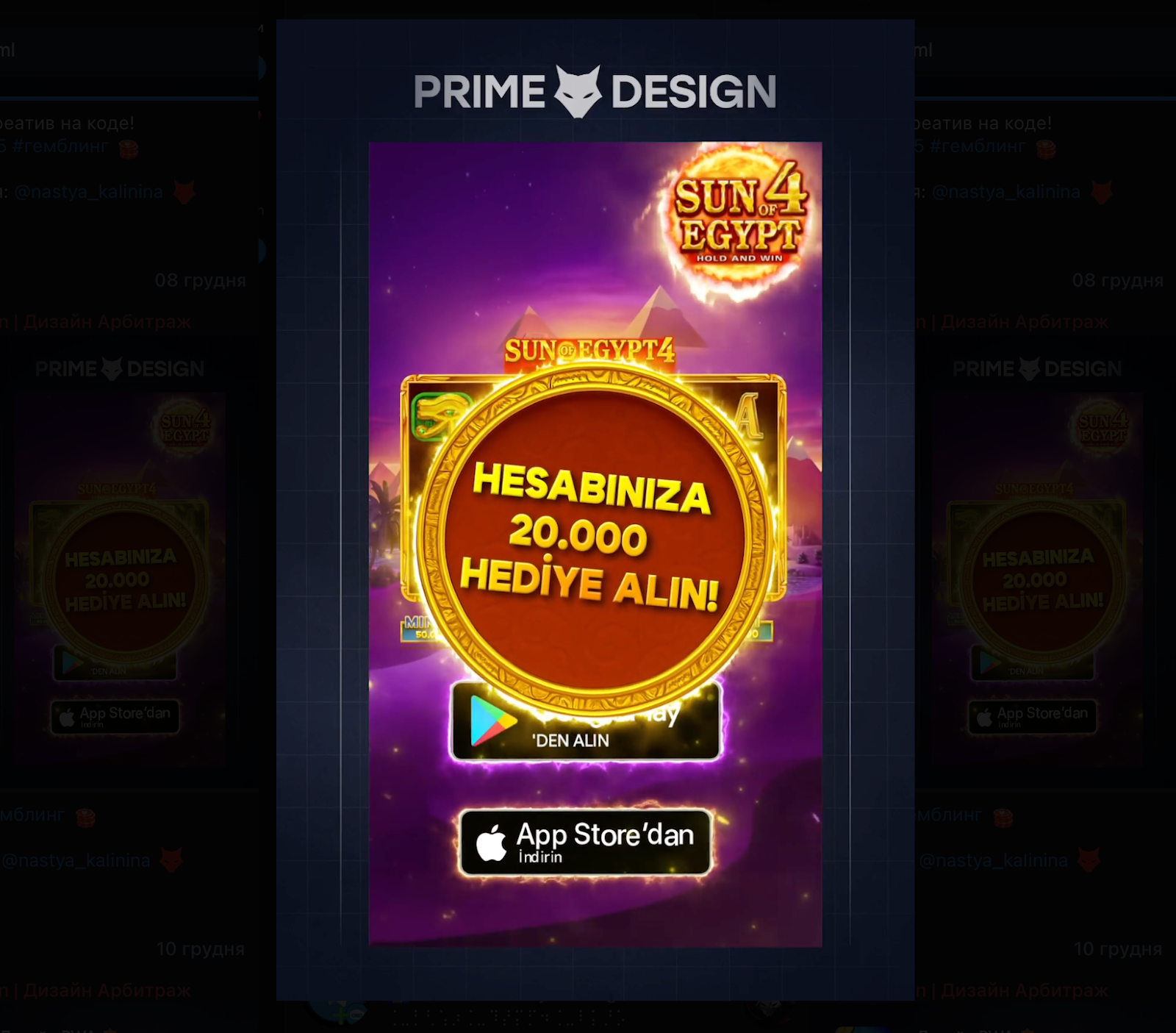 Ad creatives must be adapted to the regional target audience (Prime Design channel material)
A mechanic that converts perfectly in the US may fail in Brazil without adjusting characters or reward styles to match local preferences and mindset.
Testing and Analytics
After launching a Playable Ad, it’s not enough to monitor familiar metrics like CPC or CPI. Interactive creatives require deeper funnel analysis to improve playable ads user acquisition efficiency. Unlike video ads, which users consume passively, interactive creatives have their own internal conversion funnel. To consistently run campaigns profitably, you need to understand how users interact with every second of your creative and study playable advertising case studies and best practices.
For a deep evaluation of the in-ad funnel, you should track four key metrics:
- Engagement rate. The percentage of users who didn’t just see the ad but performed the first target action (tap, swipe).
- Time to complete. The average number of seconds it takes a user to reach the final screen. If this time is too long, you risk losing attention before the offer is shown.
- Drop-off points. The exact moments where users close the ad. This is the main indicator of UX issues or excessive level difficulty.
- Final card CTR. The conversion rate from users who completed the playable to clicks on the “Install” button.
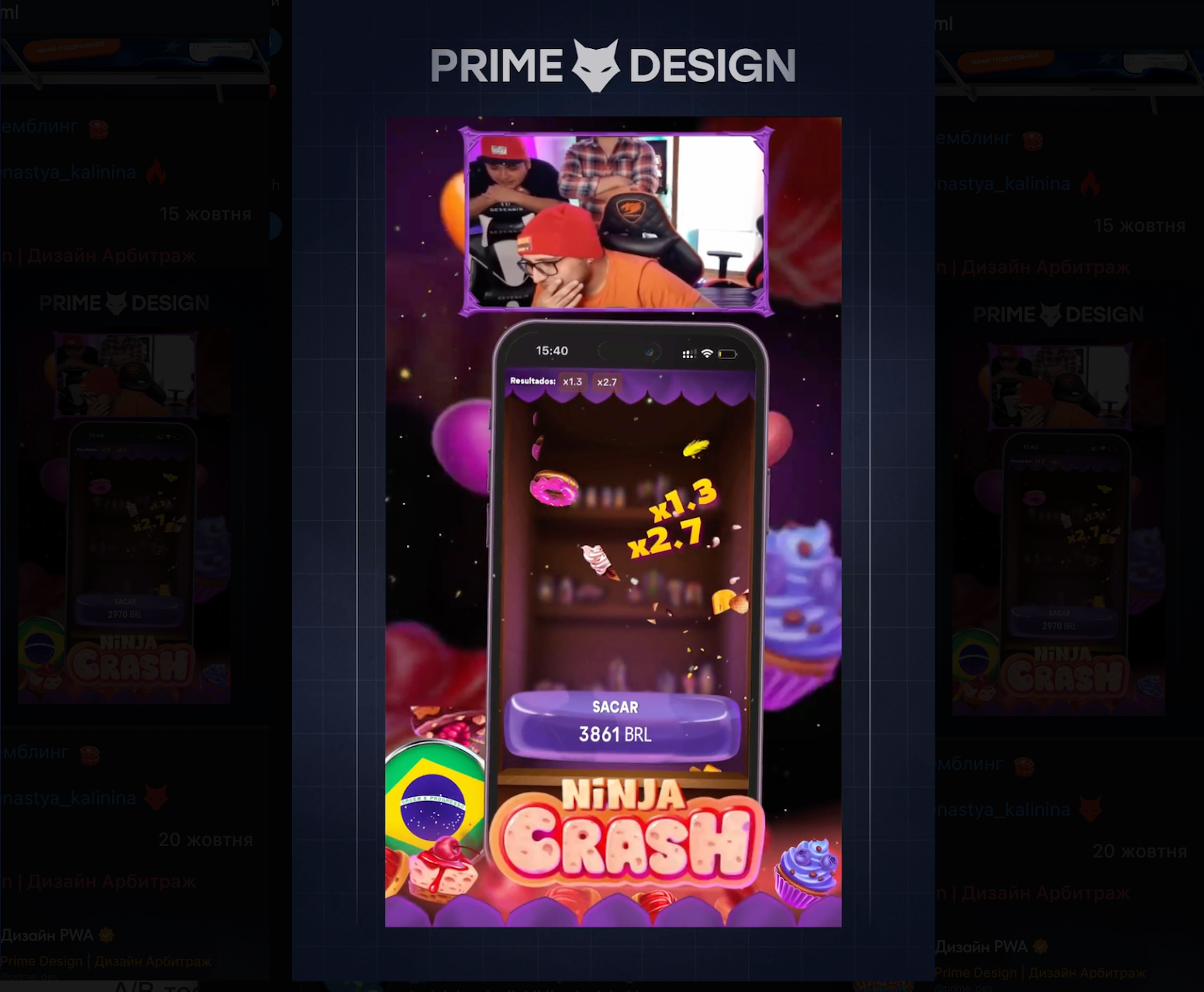 The creative must motivate the user to stay in the mini-game (Prime Design channel material)
Analyzing metrics (playable ads ctr, cpi, roas, retention rate, engagement rate) enables precise campaign optimization. Instead of blindly turning off an ad with low ROI, you can identify the exact weak point. For example, if engagement is high but final clicks are low, the gameplay itself is interesting, but the CTA on the final screen is too weak or unclear.
A/B Testing
Once the core technical metrics are under control, it’s time to A/B test the content. Practice shows that even small changes in mechanics can multiply traffic profitability.
When running split tests, we recommend changing the following variables one by one:
- Gameplay difficulty. Find the balance between “too easy” (boring) and “too hard” (frustrating).
Visual feedback. Adding confetti effects, vibration, or victory sounds after correct actions often increases completion rates. - Number of steps. Test versions where victory is achieved in 2 actions versus versions with 4–5 actions.
CTA text and button color. Classic marketing triggers on the final screen work just as effectively here as they do on landing pages.
Remember: your ultimate goal is not to entertain the user, but to motivate an install. In some cases, simpler graphics with a more aggressive call to action perform better for affiliate marketing purposes than perfectly polished but overly long gameplay.
Verticals Beyond Gaming: Where to Use Playable Ads
Many people still assume that interactive ads only work for gaming offers. However, 2025 data proved the opposite: some of the highest ROI Playable Ads started coming from classic verticals. When a user sees a game where they expect a standard banner, the surprise effect kicks in.
Here’s how gaming mechanics can be adapted to popular affiliate marketing verticals:
- E-commerce. Gamified discounts perform far better than plain coupons. Let users spin a “Wheel of Fortune,” scratch off a protective layer with their finger, or catch falling products in a shopping cart. The psychology is simple: a discount someone “wins” themselves is valued more than one given for free. This significantly increases first-purchase conversion rates.
- Fintech and Crypto. Instead of blunt promises of success, offer a trading simulator. A simple up/down button mechanic with a chart, where the user earns their first virtual profit in 10 seconds, clearly demonstrates how easy the app is to use. This removes fear of complex exchange or banking interfaces.
- Utilities and masking services. Visualizing the problem and the solution is the best strategy here. Create a mini-game where users “kill” viruses by tapping or clear a phone’s overloaded memory with a swipe. The user sees a clear “before–after” state, getting proof of the app’s value even before installing it.
- Gaming and Betting. Here, Playable Ads in-app heat up excitement. Use demo spins or games with a scripted “almost won” scenario. When the reel stops millimeters away from the jackpot, the urge to try again and get a real bonus pushes the user to install immediately.
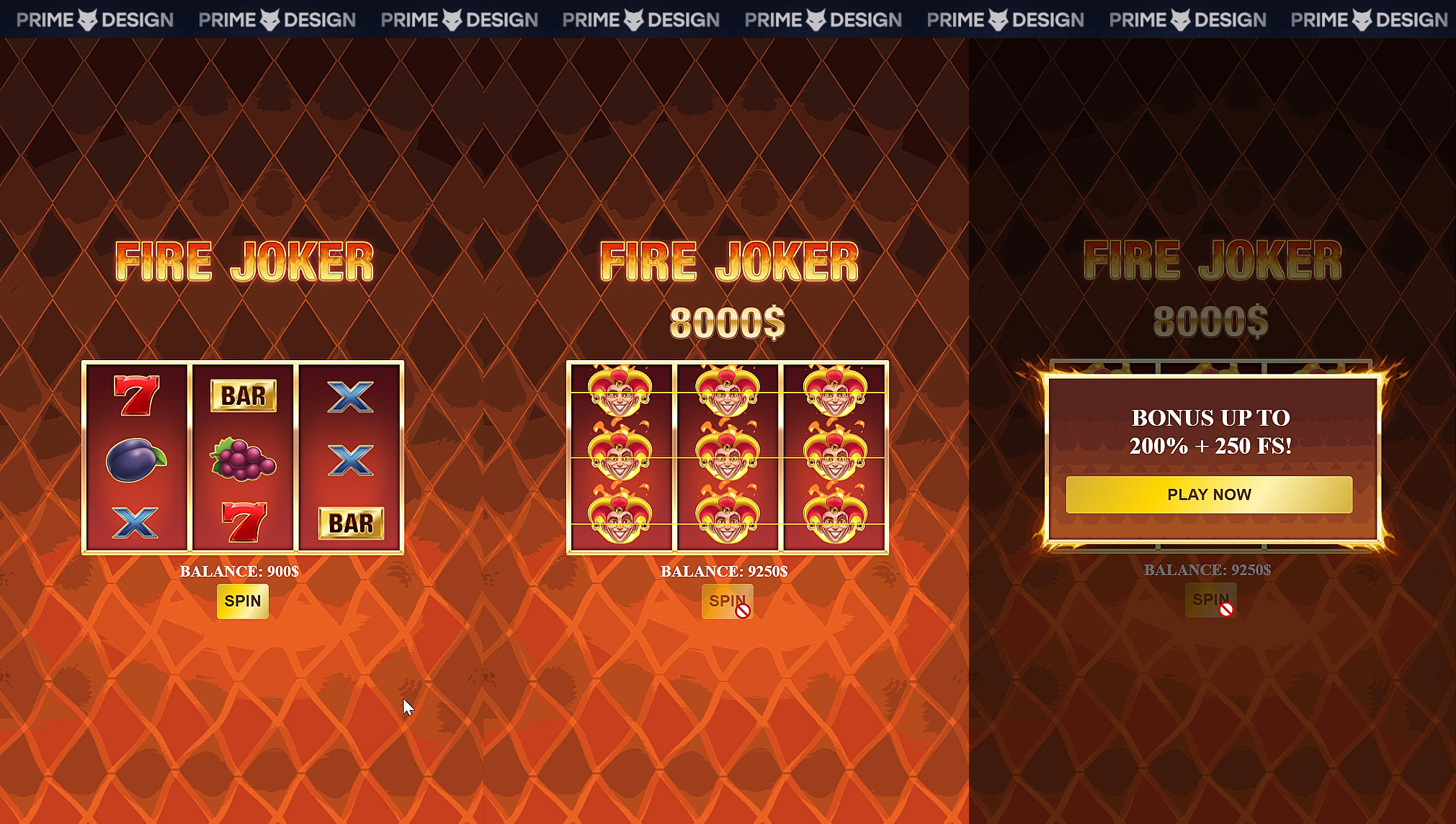 Gaming is an ideal vertical for Playable Ads (Prime Design channel material)
Interactive formats can be applied almost anywhere engagement is needed. The key adaptation rule is simple: the mechanic should metaphorically repeat the action the user will perform inside the app.
Conclusion
In 2026, interactive HTML5 playable app advertising is finally moving from bold experiments to a must-have tool. The market is confidently shifting toward hybrids: video will be used for initial attention capture, while interactivity will retain users and deliver the final push toward installation. We’ll also see widespread adoption of neural networks, significantly lowering the production barrier and making complex mechanics accessible even to solo affiliates.
That said, even the most brilliant mechanic won’t bring profit without access to quality traffic or if campaigns constantly stop due to bans. Success in the new season will depend even more on infrastructure. Use trusted agency accounts from RentAcc to smoothly pass moderation on Facebook and TikTok, and make sure to test traffic sources. For example, Moloco, where algorithms work especially well with the Playable format.
Don’t be afraid to test new approaches and go beyond familiar verticals. Audiences are tired of identical banners and are craving interaction. Those who can deliver a high-quality playable experience directly in the feed will secure the cheapest and most loyal traffic in 2026.
 Share this post